
Tazewell Deeds and Related Instruments
Tazewell County keeps its land records with the Circuit Court Clerk. That office serves as the county's recorder for property records. The record groups on file include deeds, deeds of correction, deeds of trust, releases, judgments, lists of heirs, wills, financing statements, plats, surveys, and miscellaneous instruments. The grantor-grantee index points you to a recorded deed. Reading its actual terms takes an image or certified copy. A title alone never tells you whether an interest was later released, so keep digging.
| Deed Type | What It Does | Common Use |
|---|---|---|
| Deed | Records a conveyance from grantor to grantee | Sale or other transfer of land |
| Deed of correction | Corrects a prior recorded instrument | Resolve a recording or description issue |
| Executor or administrator deed | Transfers estate property through a fiduciary | Probate or estate administration |
| Deed of trust and release | Records a secured interest and its later release | Check both the original and release entry |
| Trustee sale deed | Records a transfer after a trustee sale | Confirm through the clerk and related case records |
A deed transfers an interest in land. A deed of trust or lien records a claim against it instead. Tazewell's land index also sweeps in judgments, releases, and financing statements. Check the related deed records before concluding anything about a parcel.
Virginia keeps a separate statewide route through the SCC's UCC and federal tax-lien search. Those filings do not replace the Tazewell Circuit Clerk's deed, deed-of-trust, release, and judgment records. Read the instrument itself before deciding whether a filing touches a specific property. Get title advice first.
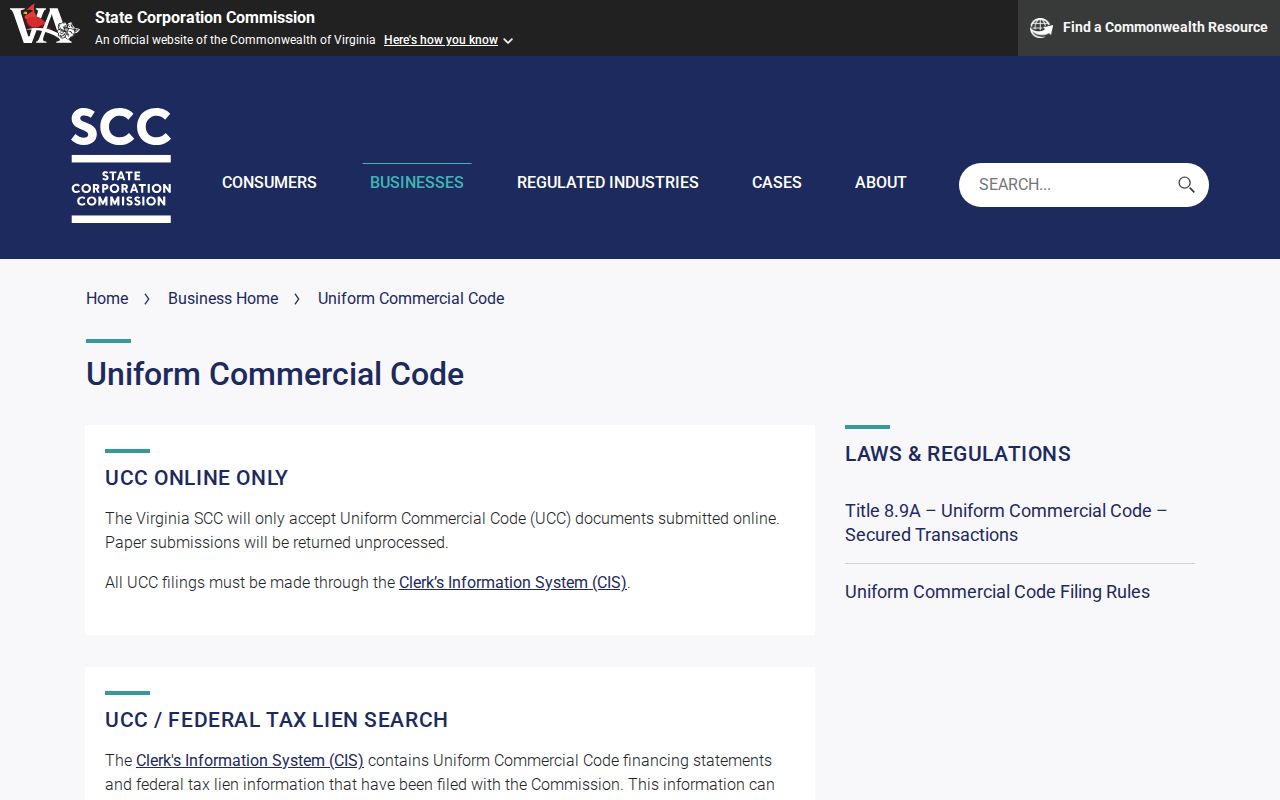
The state portal is its own research path. It does not show whether a lien attaches to a particular Tazewell parcel.
Tazewell SRA Coverage and Access
The county's June 24, 2025 memorandum spells out Secure Remote Access coverage by record group. Deeds, judgments, and wills start January 1, 1984. Active financing statements reach back to February 12, 1979. General miscellaneous records reach back to January 4, 1993. Marriage licenses begin January 3, 1950, deed plat images 1907, and plat images October 1818. These are the stated remote coverage dates, not the county's earliest surviving deed.
SRA is a subscriber service. Tazewell's local page lists it at $50 per month per individual. An application and clerk authorization are required. Virginia's statewide SRA information notes that index-only access may be free when a clerk enables it. Images can require payment. The public Tazewell instructions are not a live COVERS search screen. The available fields and result limits stay unpublished.
The Tazewell Circuit Court SRA instructions lay out the local subscription route.
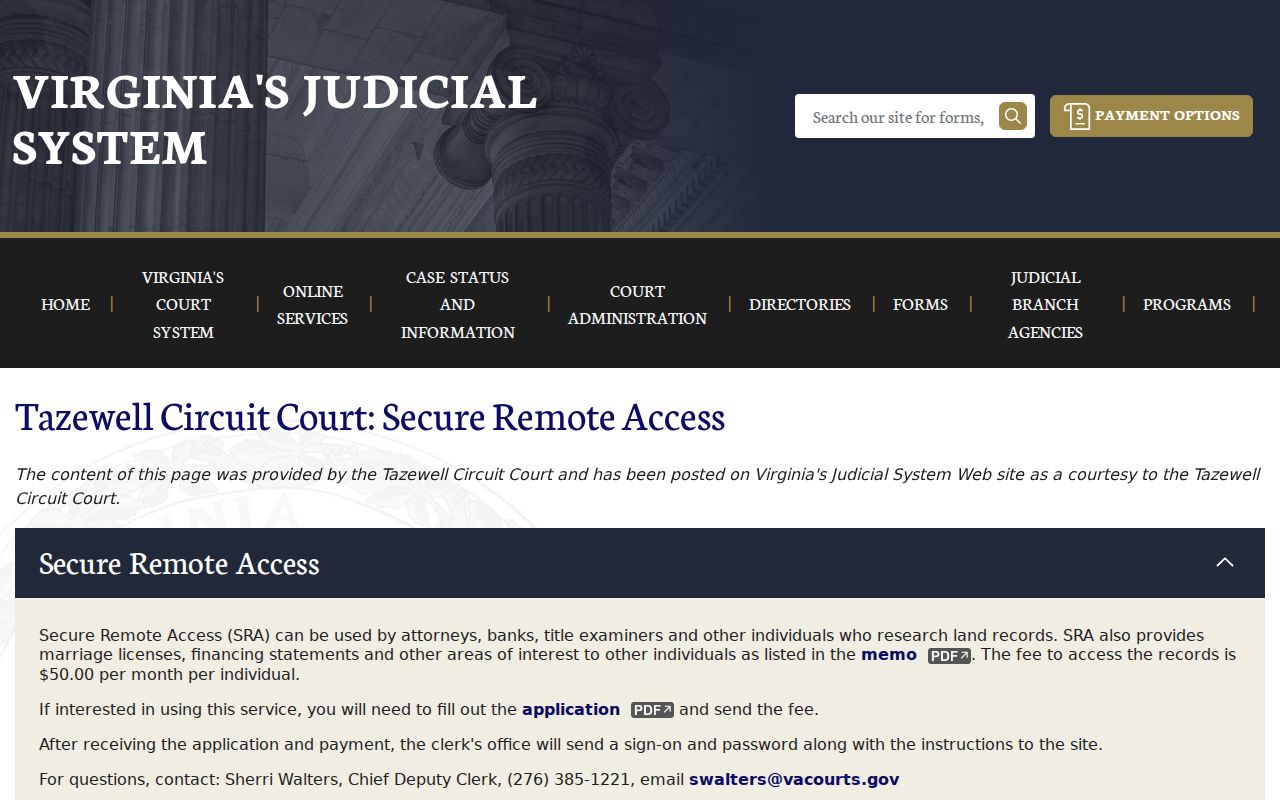
The page shown is an instruction sheet, not an indexed transaction or document image.
What the Tazewell Deed Index Exposes
Without the live COVERS form on display, the list of verified search fields stays short. The clerk's notice confirms the subscriber process and which record groups are covered. But it does not document buttons, filters, or result fields. Start your request with a grantor or grantee name. Add any known recording date or book-and-page clue. Then ask the clerk which index fields the terminal actually offers.
| Search item | What the research confirms | How to proceed |
|---|---|---|
| Grantor or grantee | Party-chain method is documented; live labels not exposed | Ask for the party index or SRA field name |
| Document type | Multiple record groups are covered; dropdown list not captured | State deed, release, plat, judgment, or other known type |
| Recording date and reference | Book/page or instrument fields are not verified in the live form | Provide any prior reference and request clerk confirmation |
| Image access | Subscription and clerk authorization may apply | Use the courthouse terminal or request a copy if unavailable |
The state SRA overview explains the split between index-only access and document images. Treat expected database fields as unconfirmed until the local screen shows them.
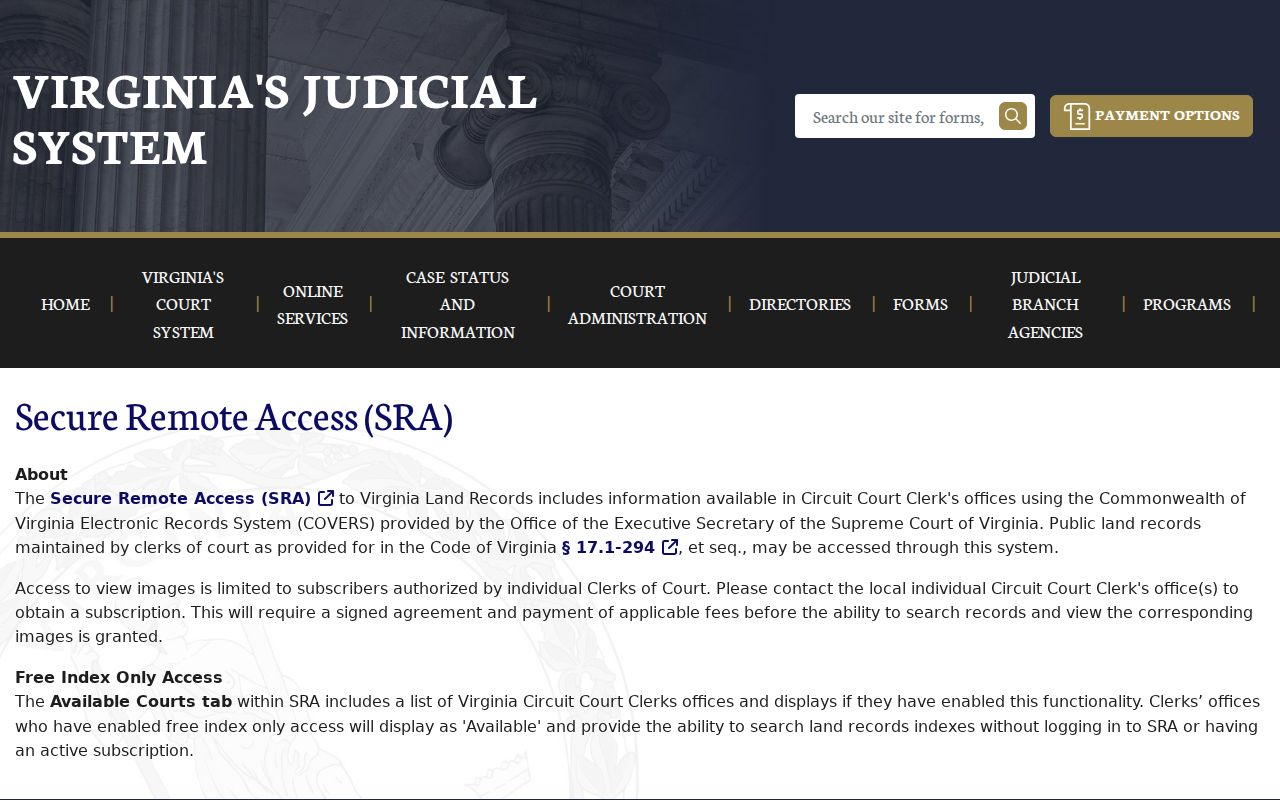
The statewide page explains the access model, but Tazewell's own memo controls the local coverage dates.
Walk the Tazewell Grantor-Grantee Chain
A grantor-grantee index is a name path through recorded transfers, not an address search. Begin with a current owner clue from the Commissioner. Find the deed where that party received the property. Then read the grantor named on it. Search that earlier party as a grantee to keep walking the chain back. Cross-check the legal description and tax-map reference along the way. One name can match the wrong parcel.
- Find the most recent deed naming the current owner as grantee and note its date and reference.
- Read the grantor's name and search that party as a prior grantee.
- Compare each legal description, parcel reference, and book or page before adding a transfer to the chain.
- When the online record does not cover the date, use the historic index and request the cited deed book.
- Grantor
- The party named as transferring an interest in the instrument.
- Grantee
- The party named as receiving that interest.
- Chain of title
- The sequence of recorded transfers used to follow a parcel through time.
- Book and page
- A volume and page reference in the clerk's recorded land books.
Older Tazewell Deed Books Begin in 1800
Deed records in Tazewell County reach back far beyond the 1984 SRA cutoff. The Library of Virginia catalog lists Deed Book 1 covering 1800 to 1809. More books run through the nineteenth century. It also holds an Index to Deeds, Grantors and Grantees, 1800 to 1906, plus separate index reels for later periods, land-entry books, survey books, and release deed books. Book 20 includes mechanics' liens from 1884 to 1886. Those catalog dates carry a researcher from an old name to the right book or reel.
Start with the index and write down the citation. Then request the matching image through the Library of Virginia, interlibrary loan where offered, or the Circuit Court Clerk. Tazewell County was formed in 1799 from Russell and Wythe, with later boundary additions. So an older owner of record may appear in a parent county's deed records. No courthouse fire or catastrophic loss is on record, and a gap in an online sequence is not proof of destroyed records.
The Tazewell microfilm finding aid names the book and index runs.
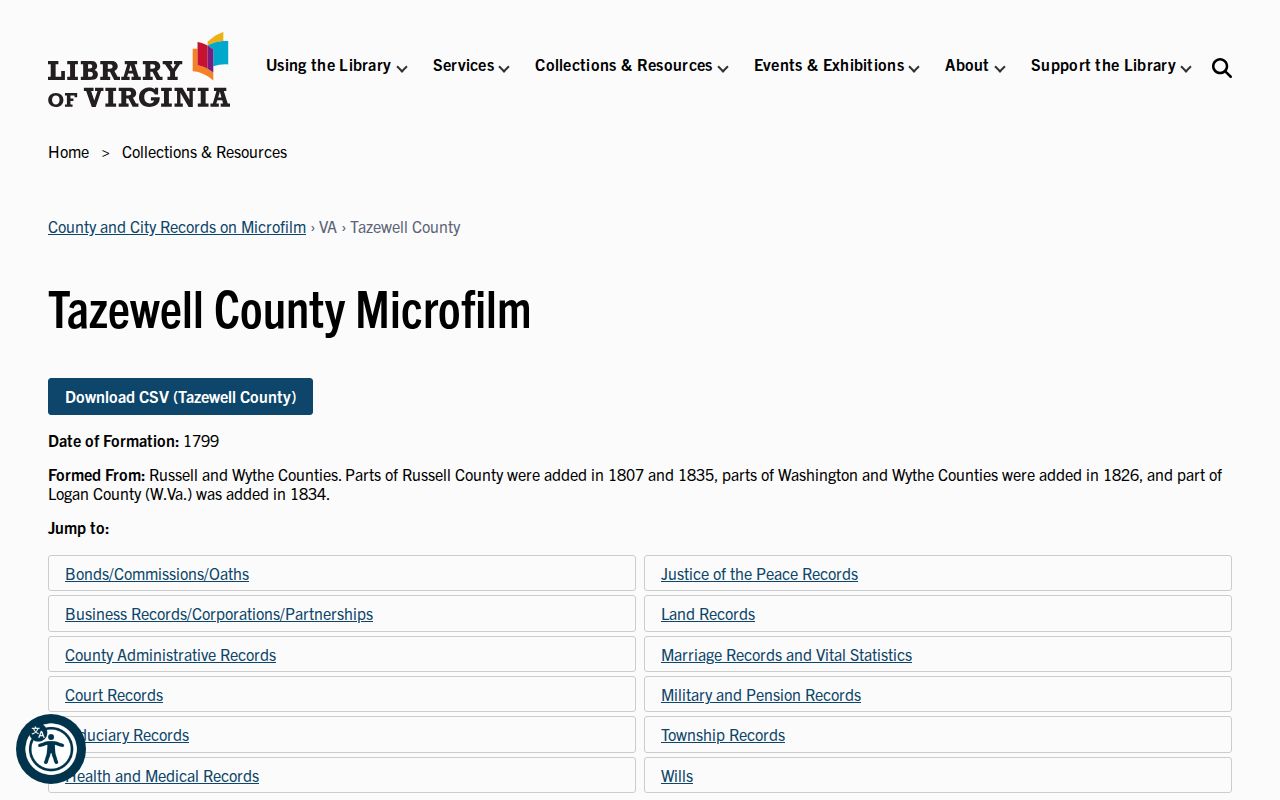
The finding aid bridges you to the older records; it does not hold every deed image itself.
Estate Records That Move Tazewell Land
Land in Tazewell County often changes hands after a death. A parcel can pass by will. It can also pass by fiduciary qualification, list of heirs, sale order, executor deed, administrator deed, or a deed straight from the heirs. The will alone rarely ends the story. Tazewell's Commissioner notes that wills and lists of heirs drive ownership transfers. So search the Circuit Clerk's probate division along with the land index whenever a name changes. Pair the estate file with the recorded deed or order. That final instrument is what moves title.
For older estates, the Library of Virginia catalog lists will books. It also lists inventories, appraisements, accounts, and guardians' records. Modern SRA will access begins with the coverage group stated in the 2025 memo. Virginia death records fall under the state's public-access rule before opening. And the county clerk stays custodian of the probate file. When you request it, give the estate name, file number, fiduciary, real-property reference, and final order.
Copies from the Tazewell Clerk
The Circuit Court Clerk sits at 135 Court Street, Suite 202, Tazewell. Weekday hours run from 8:00 a.m. to 4:00 p.m. Deed recording cuts off at 3:45 p.m., per the official court page. In the deed room, ask about the public terminal, an index reference, plain copies, and certified copies. Ask whether image access carries a separate fee. The clerk publishes no current per-page or certification fee schedule online. Confirm the amount before you send anything.
When an image is not online, use the clerk's contact route. Give party names and the best recording reference you have. Say whether you need certification. A courthouse visit can still surface an older volume or index. No remote route reaches it. Identify the parcel or parties clearly. The land index runs by names, so never assume the clerk can search an address.
Tax-Sale Notices Need Title Review
The county's tax-sale notice tells bidders to run independent title research and inspect the property. A notice is not a title report. Check the Circuit Clerk's deeds, liens, releases, and any case file. Ask the Treasurer about delinquent balances too. Costs are nonrefundable. A bidder who owes delinquent Tazewell real-estate taxes cannot bid at all.
Foreclosure actions and trustee sales leave tracks in two places. One is the civil case file. The other is the land records. Search the owner, lender, trustee, creditor, and purchaser names where they apply, then confirm whether a later release or trustee deed was recorded. The notice routes questions to the County Attorney's Office. It never replaces a title search or legal advice.
Request a Tazewell County Deed Copy
Start with the index. Find the grantor or grantee, then note the citation. From there, use the authorized SRA image route when it covers the year. You can also work at the clerk's public terminal, or contact the deed room for a copy. Older deeds may need a deed book or microfilm reference. No current copy or certification fee schedule is posted. Confirm charges and accepted payment with the clerk before you submit the request.
Recorded, not guaranteed. The index shows instruments in the record system, but it is not a title opinion and does not prove that no unrecorded or later claim exists. A title professional reviews the chain and related filings.